
92nd ACFAS Congress, a look back at the RQEI sessions
- May 15, 2025
- Posted by: Mathieu Baudy
- Categories: Conferences, Events
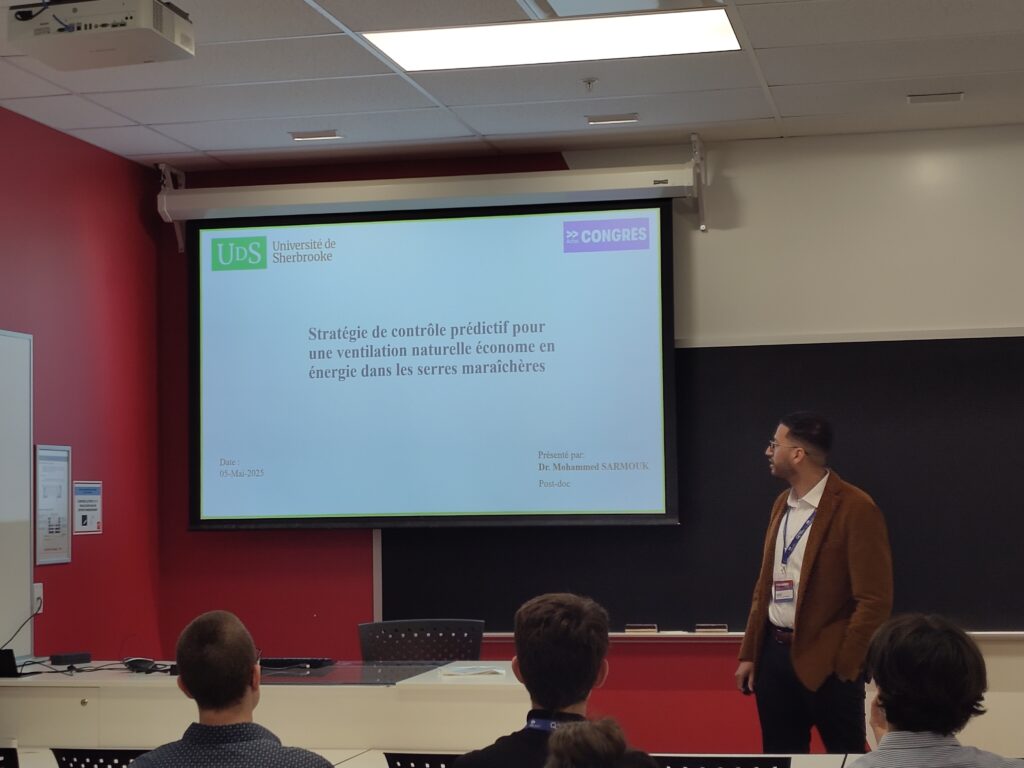
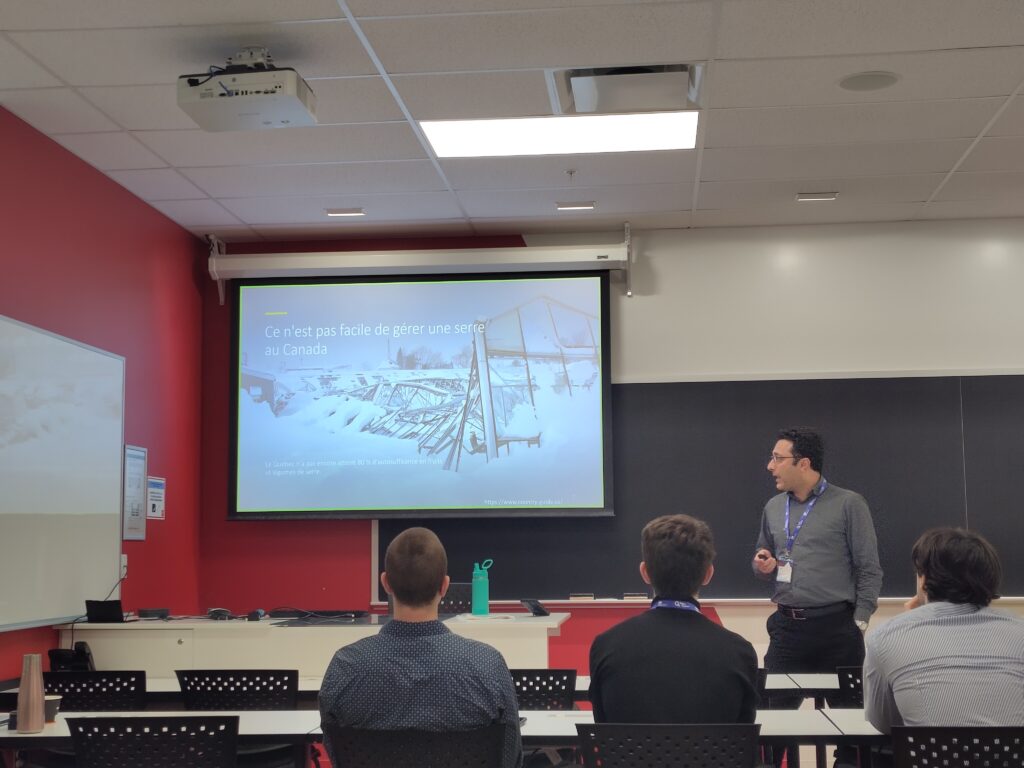
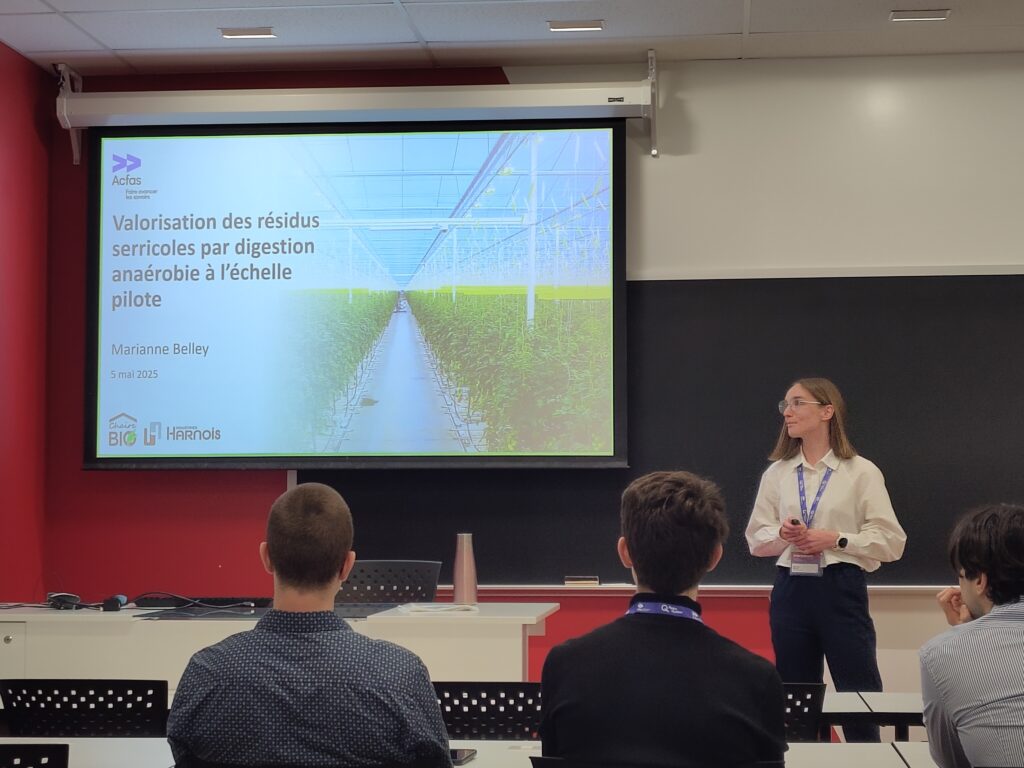
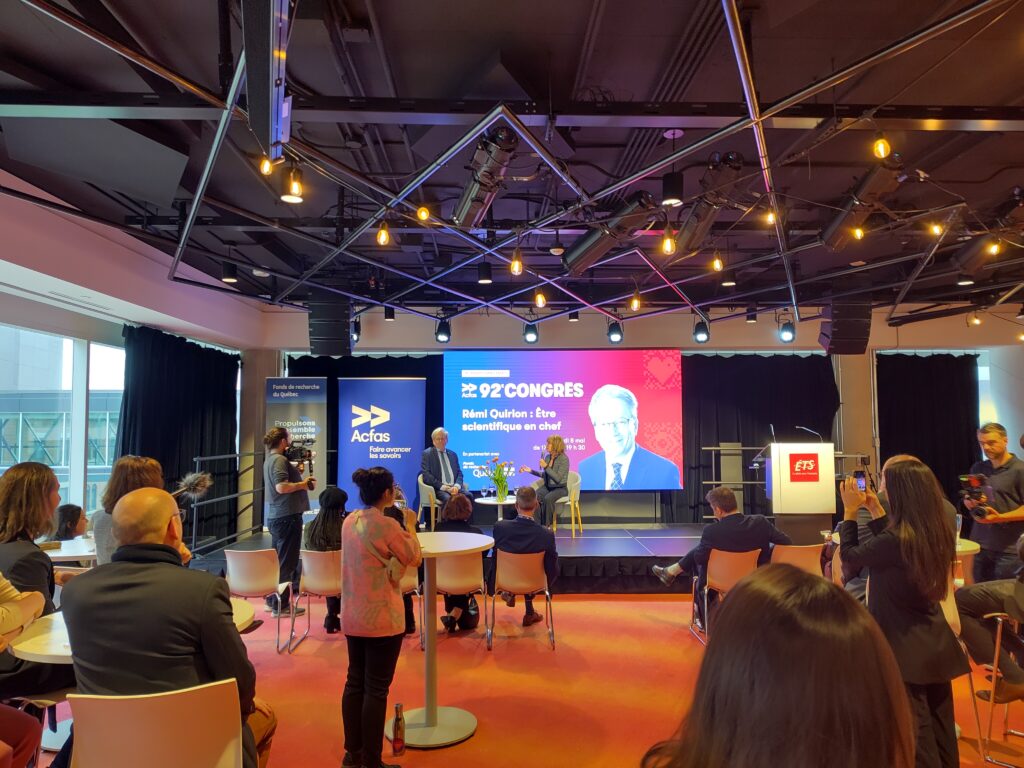
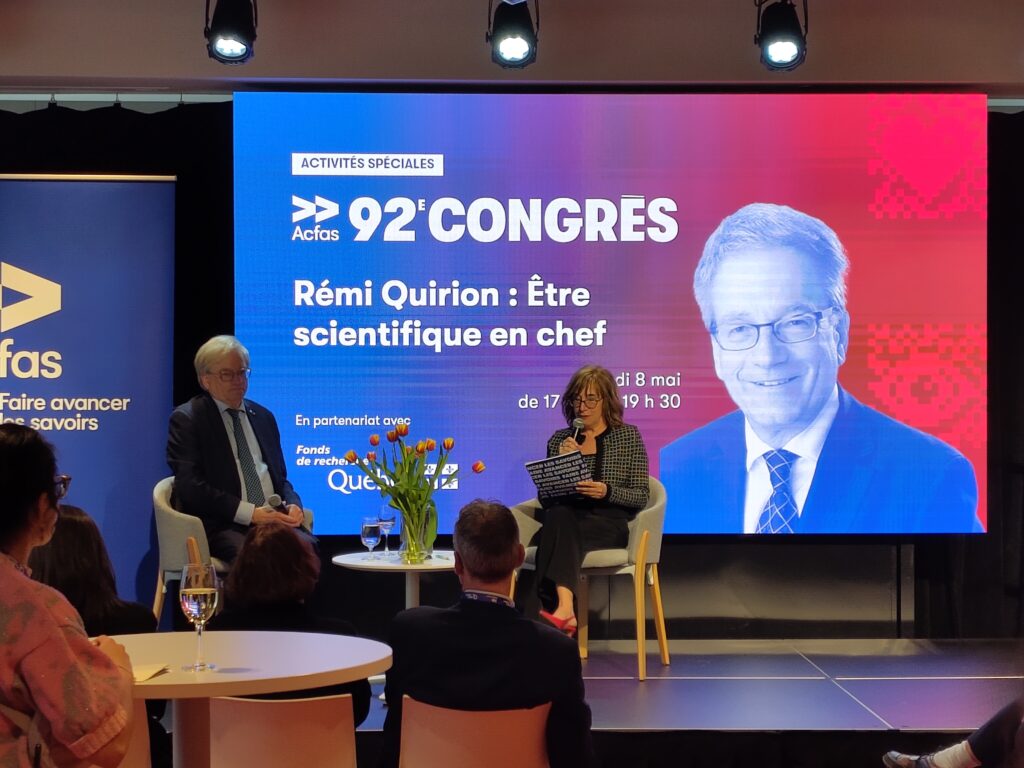
On May 5 and 8, the RQEI contributed to the financing of two exciting days at the 92nd ACFAS Congress, hosted at ÉTS. These sessions brought together researchers, students and experts to discuss innovative energy solutions on greenhouse energy efficiency and the energy transition in northern regions.
Session 209: Energy Efficiency of Crop Production Enclosures (5 May)
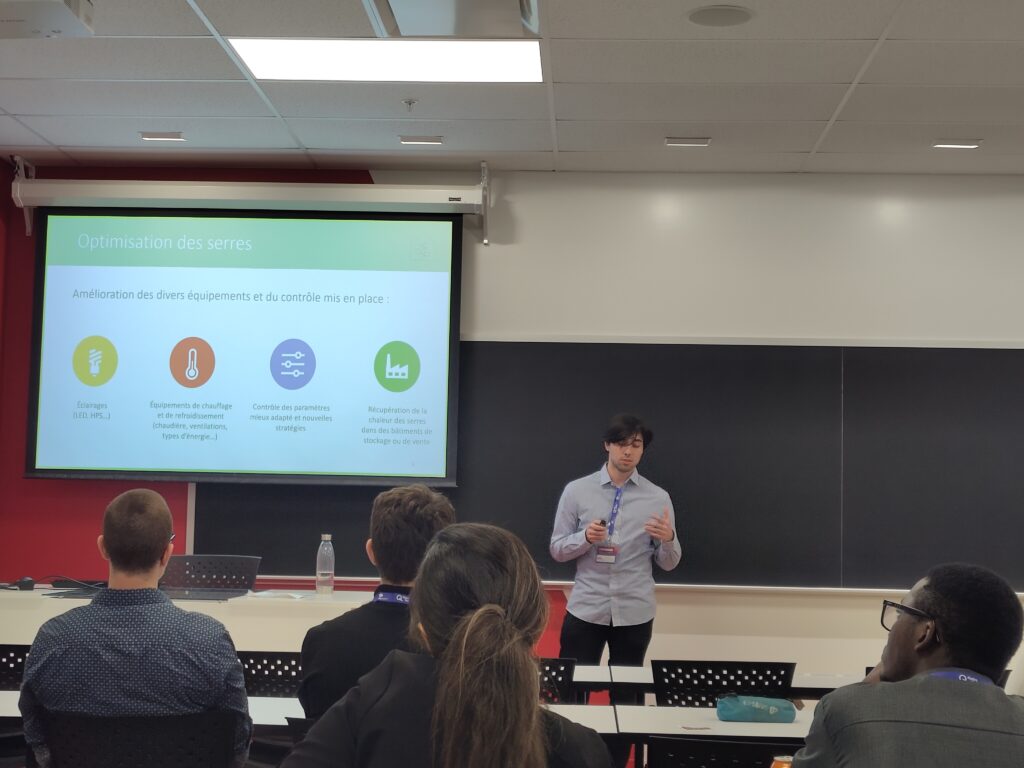
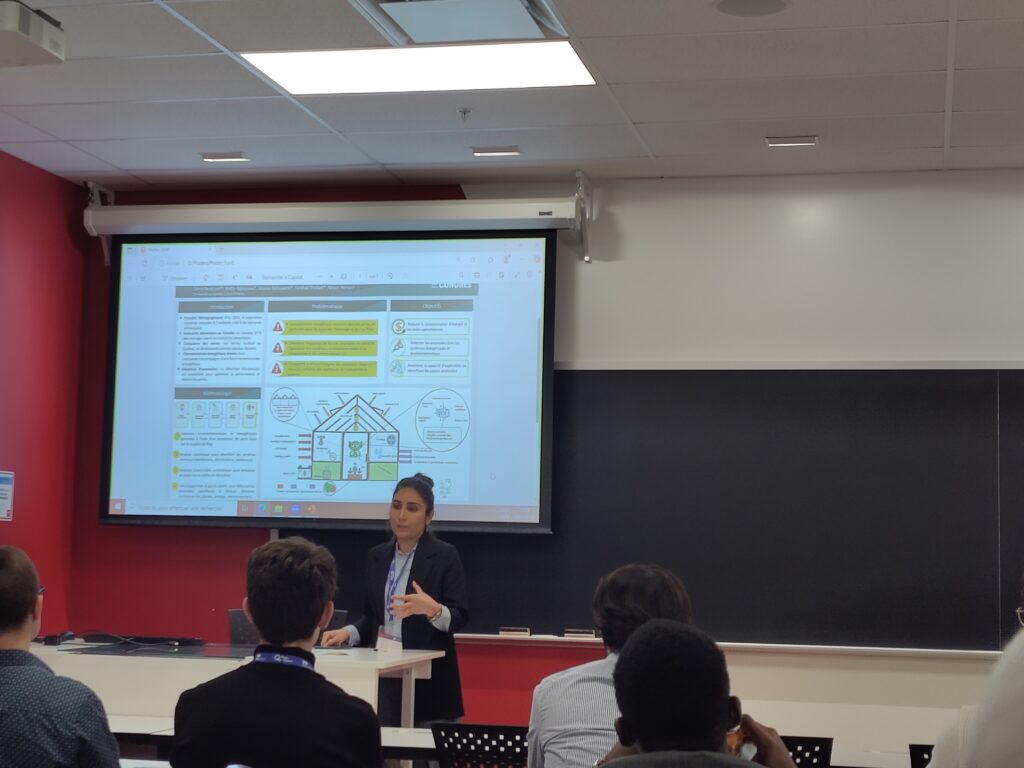
Chaired by Mathieu Bendouma (Université Laval) and Didier Haillot (ÉTS), this session explored strategies for optimizing energy in greenhouses and farm buildings.
Oral Communications Program:
- Portrait of vegetable and fruit greenhouses in Quebec – Mourad Louardani (MAPAQ).
A presentation detailing the challenges and opportunities of greenhouse production in Quebec. - The impacts of climate change on the greenhouse industry – Alexis Briand, Tommy Chagnon-Lessard and Louis Gosselin (Université Laval).
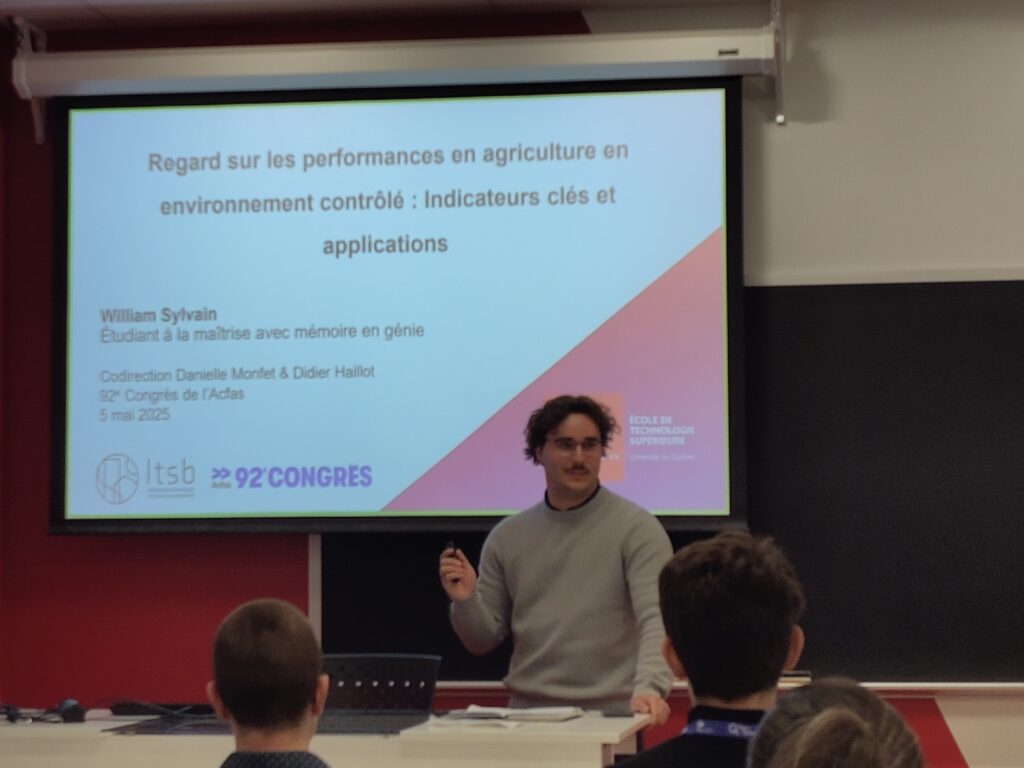
An analysis of the adaptations needed to cope with the changing climate. - A Look at Agricultural Performance in a Controlled Environment: Key Indicators and Applications – William Sylvain, Didier Haillot and Danielle Monfet (ÉTS).
A study on technologies and indicators to improve yields. - Energy optimization of greenhouses in Quebec: validation of the GreenLight model – Pierre-Olivier Schwarz and Louis Gosselin (Université Laval).
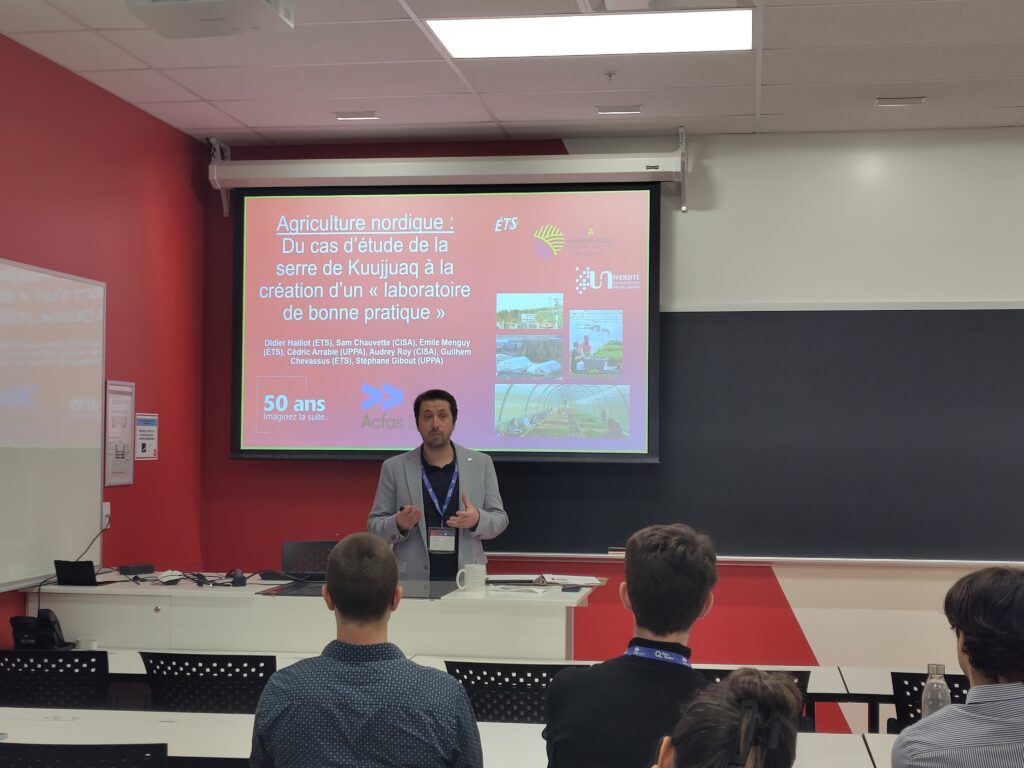
An innovative solution to reduce the energy consumption of greenhouses. - Northern Agriculture: From the Kuujjuaq Greenhouse to a Good Practice Lab – Didier Haillot (ÉTS), Sam Chauvette and Audrey Roy (CISA Victoriaville), Emile Menguy (ÉTS), Cédric Arrabie and Stéphane Gibout (UPPA).
A greenhouse project in the Far North to test sustainable agricultural practices.
Poster presentations:
- Efficient greenhouse climate control with a controller based on the Bellman optimality principle – Kossi Landry Adjanohun and Kodjo Agbossou (UQTR).
- Estimation of plant loads to simulate plant production enclosures – Mathieu Laroche and Danielle Monfet (ÉTS).
- Detection of anomalies in greenhouses – Zahra Farahzadi, Kodjo Agbossou and Farshad Etedadi Aliabadi (UQTR).
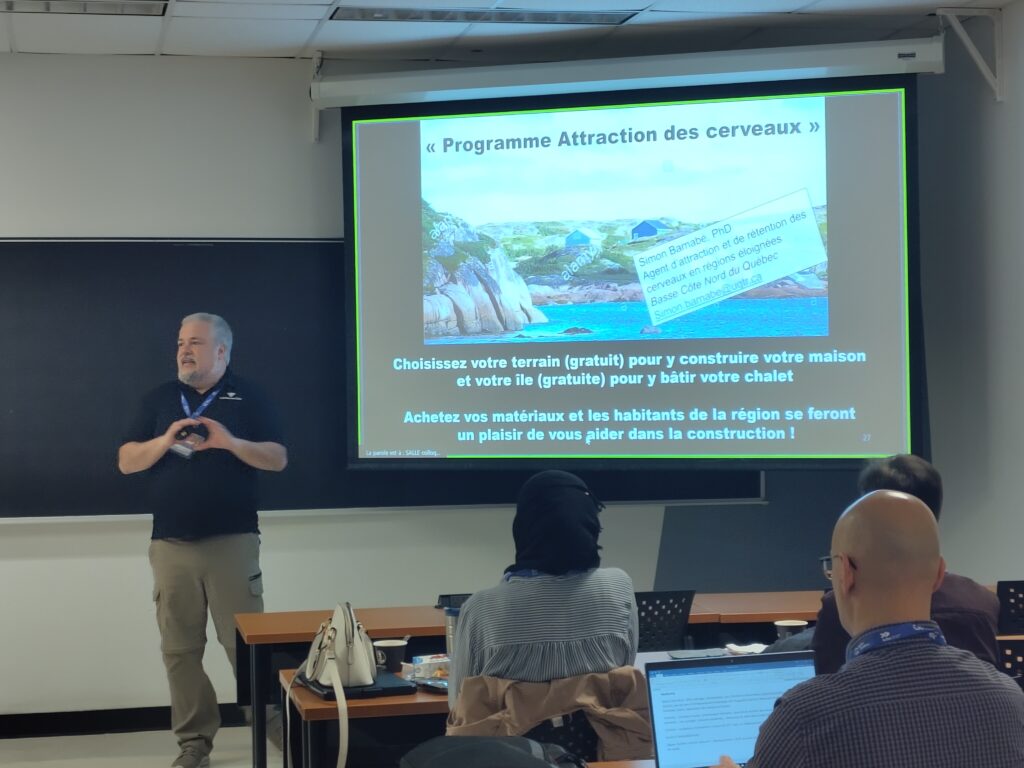
Session 210: The Energy Transition North of the 49th Parallel (8 May)
Moderated by Daniel Rousse (ÉTS) and Adrian Ilinca (ÉTS), this session explored solutions for the energy transition in remote and northern regions.
Oral Communications Program:
- Hatch Ltd.’s Northern Decarbonization Operations – Michel Carreau (Hatch Ltd.).
A presentation on Hatch’s decarbonization projects in the North. - Off-grid decarbonization scenarios for carbon neutrality in 2050 – Adrian Ilinca and Arielle Ebwengue (ÉTS).
A study on solutions to achieve carbon neutrality in isolated systems. - Shared storage of hydrogen as a backup system for microgrids – David Camilo Toquica Cardenas, Kodjo Agbossou and Nilson Henao (UQTR).
An innovative solution to improve energy stability in remote areas. - Analysis of the auxiliary loads of an energy storage system connected to a microgrid – Arthur Heissel, Adrian Ilinca and Daniel Rousse (ÉTS).
Interactive workshops and panels:
- Open Forum: How to accelerate decarbonization in the North? – Moderated by Daniel Rousse (ÉTS).
A collaborative discussion on the challenges and opportunities for reducing emissions in northern regions.
Scientific presentations:
- Experimental study of photovoltaic thermal collectors for the Low Arctic – Daniel Baril, Hua Ge and Andreas Athienitis (Concordia University).
- Energy storage by multi-energy thermal pumping in a northern mining context – Sullivan Durand, Didier Haillot and Daniel Rousse (ÉTS).
- Optimization of renewable energies in isolated microgrids via genetic algorithms – Cristian David Cadena Zarate, Daniel Rousse and Adrian Ilinca (ÉTS).
- Control and stability of isolated microgrids with high penetration of renewable energies – Julien Oum Oum ( ÉTS).
In conclusion
These two days highlighted innovative work and enriching discussions on contemporary energy challenges. Thanks to the active participation of researchers from Quebec universities and industrial partners, sessions 209 and 210 demonstrated the strength of collaboration to address Quebec’s climate and energy challenges!