

Jesse Greener
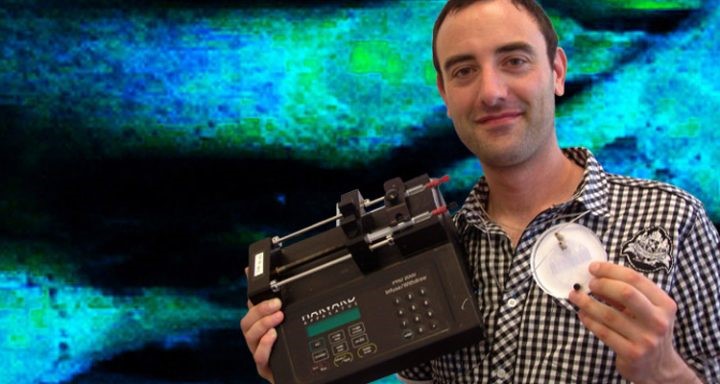
Jesse Greener has been a full professor of chemistry at Université Laval since 2012 where his research area focuses on the combination of microfluidics/microfabrication, electrochemistry and analytical chemistry at the microscopic scale. Jesse is also the founder of Canada’s most established microfluidics company, FlowJEM Polymer Microfluidics, which operates in Toronto. Jesse’s team operates a well-funded research laboratory to develop and commercialize microfluidic analysis tools for spectroscopy and electrochemistry and use them for studies on the recovery of values from waste streams (waste to wealth). A major research theme of his group concerns bioelectrochemical systems (BES), which exploit electroactive bacteria to break down organic molecules in domestic and industrial wastewater. His group has demonstrated the world’s most efficient microfluidic microbial fuel cell, as well as new specialized methods for their study, including computational simulations of fluid dynamics. Other areas of interest include waste heat recovery, various sensors, electrochemical CO2 reduction, and bioinformatics.
Jesse Greener is a full professor in Chemistry at Université Laval since 2012 where his research area focuses on combining microfluidics/microfabrication, electrochemistry and microscale analytical chemistry. Jesse is also the founder of Canada’s most established microfluidic company, FlowJEM Polymer Microfluidics, which opperates out of Toronto. Jesse’s team exploits a well-funded research laborator to design and commerciallized microfluidic analytical tools, for spectroscopy and electrochemistry and use them for studies into recovery of valubles from wastestreams (waste-to-wealth). A major research theme in his group is bioelectrochemical systems (BES), which exploits electroactive bacteria to breakdown organic molecules in domestic and industrial wastewaters. His group has demonstrated the highest performing microfluidc microbial fuel cell in the world, along with new specialized methods for their study, including computational fluid dynamics simulations. Other areas of interest include waste heat recovery, various sensors, and electrochemical CO2 reduction, and biocomputing.