


Supreme Hussein
Supreme Hussein
Mr. Hussein Suprême obtained a bachelor’s degree in electromechanical engineering from the Faculty of Science...
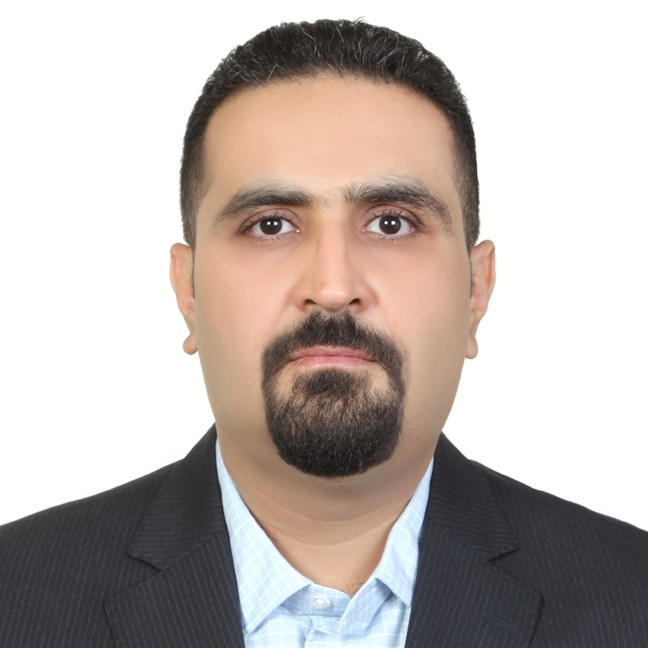
Vahid Rahmanian
French Version:
Vahid Rahmanian, Ph.D., is a postdoctoral researcher at the National Integrated Centre for Smart Manufacturing (CNIMI) at the Université du Québec à Trois-Rivières (UQTR). Specialized in polymer engineering and nanotechnology, he leads multi-physics modeling and industrial process optimization projects in the context of Industry 4.0. His current research focuses on the behavior of nanocomposite materials, improving the energy efficiency of production lines, and integrating smart sensors. He is recognized for his expertise in materials characterization, polymer fatigue modeling and 3D printing. With several publications and international collaborations, he actively contributes to the development of innovative solutions in the fields of renewable energies and smart technologies.
English Version:
Vahid Rahmanian, Ph.D., is a postdoctoral researcher at the Centre national intégré du manufacturier intelligent (CNIMI) at the Université du Québec à Trois-Rivières (UQTR). Specializing in polymer engineering and nanotechnology, he leads multi-physics modeling and industrial process optimization projects within the Industry 4.0 framework. His current research focuses on the behavior of nanocomposite materials, improving energy efficiency in production lines, and integrating smart sensors. He is recognized for his expertise in material characterization, polymer fatigue modeling, and 3D printing. With numerous publications and international collaborations, he actively contributes to the development of innovative solutions in renewable energy and intelligent technologies.
Vahid Rahmanian
French Version: Vahid Rahmanian, Ph.D., is a postdoctoral researcher at the National Integrated Centre for...

Himanshu Grover
Summary. Dr. Himanshu Grover has been a postdoctoral researcher (research) in the Department of Electrical and Computer Engineering since February 2023. He has several years of experience in the development, operation and control of microgrids. His particular interests lie in the control and operation of low-inertia microgrids with large-scale integration of renewable energy sources. He received his B.Tech degree in Electrical Engineering from the Department of Electrical Engineering, Jamia Millia Islamia, New Delhi, India in 2014, M.Tech in Renewable Energy Systems from the School of Renewable Energy and Efficiency at the National Institute of Technology, Kurukshetra, Haryana, India in 2016 and Ph.D. degree. in Monitoring Operations and Control Strategies for Smart Power Systems from the Department of Energy Studies and Engineering at the Indian Institute of Technology, Delhi, India in 2023.
Areas of interest
- Microgrid voltage and charging frequency control.
- Intelligent Electrical Systems
- Integration of renewable energy systems.
- Operation and control of low-inertia microgrids.
- Development of digital twin systems.
- Multi-timescale control of distributed energy resources.
Academic Qualifications
- Doctor of Philosophy (Doctor of Philosophy) Department of Energy Studies and Engineering;Indian Institute of Technology, Delhi, New Delhi, India
- Master of Technology, Renewable Energy Systems; National Institute of Technology, Haryana, India
- Bachelor of Technology, Electrical Engineering; Jamia Millia Islamia, New Delhi, India
—
Summary. Dr. Himanshu Grover is a postdoctoral fellow (research) at Department of Electrical and Computer Engineering since February, 2023. He has several years of experience in microgrid development, operation and control. His special interests lie in control and operation of low-inertia microgrids with large scale integration of renewable energy sources. He has received his B.Tech degree in Electrical Engineering from Department of Electrical Engineering, Jamia Millia Islamia, New Delhi, India in 2014, M.Tech in Renewable Energy Systems in School of Renewable Energy and Efficiency from National Institute of Technology, Kurukshetra, Haryana, India in 2016 and Ph.D. in Monitoring Operation and Control Strategies for Smart Electrical Systems from Department of Energy Studies and Engineering, Indian Institute of Technology Delhi, India in 2023.
Areas of Interest
- Microgrid Load frequency voltage control.
- Smart Electrical Systems
- Integration of Renewable Energy Systems.
- Operation and control of low-inertia microgrids.
- Development of Digital-Twin Systems.
- Multi-time Scale Control of Distributed Energy Resources.
Academic Qualifications
- Ph.D. (Doctor of Philosophy), Department of Energy Studies and Engineering; Indian Institute of Technology Delhi, New Delhi, India
- Master of Technology, Renewable Energy Systems; National Institute of Technology, Haryana, India
- Bachelor of Technology, Electrical Engineering ; Jamia Millia Islamia, New Delhi, India
Himanshu Grover
Summary. Dr. Himanshu Grover has been a postdoctoral researcher (research) in the Department of Electrical...
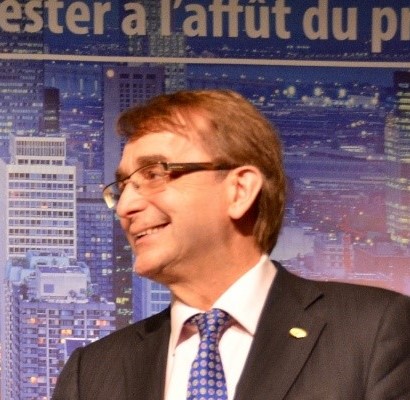
Patrice Mangin
The first Canadian biorefinery to produce 100% renewable drop-in fuels from logging residues is being established. Located in La Tuque, the biorefinery will produce approximately 210 million litres of fuel. This project, involving BioÉnergie La Tuque (BELT: General Manager, Patrice Mangin) and Neste, the oil company, is the lead investor and future operator, with an investment of approximately $1.2 billion CAD. Neste is the world leader in renewable fuel production and the third most sustainable company in the world across all industries. The project will create nearly 500 permanent jobs, excluding the construction planned for 2023. Within the network, we are working to optimize fuel production by adding green hydrogen obtained by water hydrolysis (alkaline or other technologies) or even by adding a mixture of green hydrogen and hydrogen obtained by oil cracking as long as the carbon reduction of the fuels is at least 60%.
Production of 99.9% pure hydrogen from biomass. This represents a smart use of Quebec’s hydroelectric power, as the energy required to produce hydrogen is significantly lower than for water hydrolysis. The energy is supplied by biomass. We aim to optimize hydrogen production by analyzing the best hydrolysis technologies. The hydrogen will be used in transportation, primarily heavy transport, including maritime and rail, as well as public transportation (hydrogen buses). We are also exploring hydrogen fuel cell (SOFC) technologies and the direct injection of hydrogen into internal combustion engines. Here too, we are working with a company (H2V) whose objective is to build a 50,000-tonne-per-year biohydrogen production plant in Bécancour, starting in the fall of 2020.
Development of an efficient and flexible trigeneration energy system for off-grid systems based on fuel cells for electricity and heat production. This involves the integration of existing technologies. The target market is remote, off-grid regions.
Patrice Mangin
UQTR
The first Canadian biorefinery to produce 100% renewable drop-in fuels from logging residues is being...
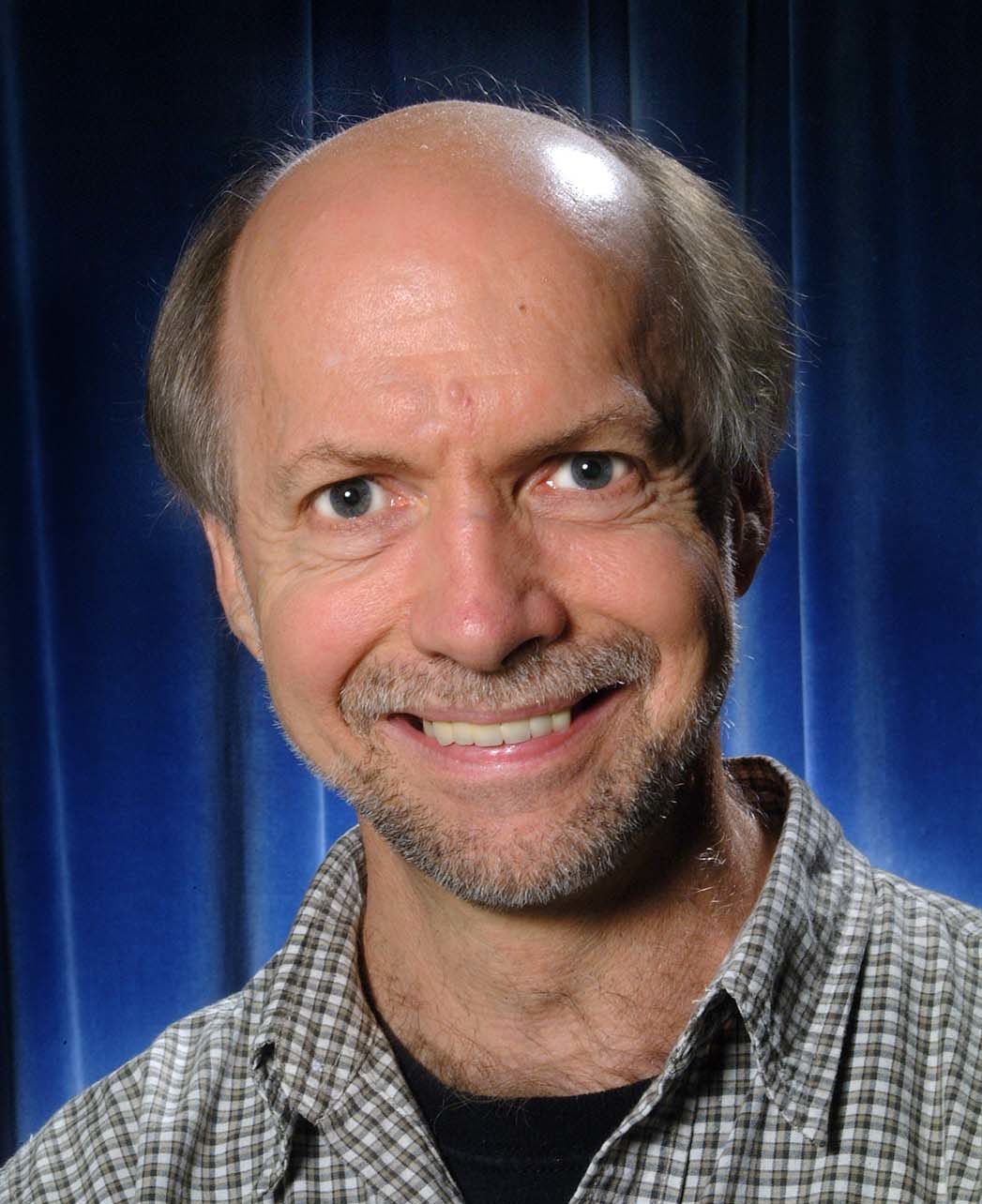
Yves Dubé
Yves Dubé is Professor Emeritus and Associate Professor in the Department of Mechanical Engineering at the Université du Québec à Trois-Rivières. He holds a Bachelor of Engineering in Engineering Physics, a Master of Engineering in Mechanical Engineering, and a PhD in Metallurgy from Université Laval, Canada. His main research interests include fuel cells and energy management in hybrid vehicles, the conversion of combustion engines to renewable fuels, vehicle management and instrumentation for autonomous vehicles, real-time programming, and optimization techniques.
Yves Dubé
UQTR
Yves Dubé is Professor Emeritus and Associate Professor in the Department of Mechanical Engineering at...