

Jacques Huot
Research on metal hydrides is primarily focused on two areas: the development of new alloys and the application of new synthesis and preparation techniques. Several types of alloys are currently being studied, including magnesium- or titanium-based alloys, TiFe alloys, high-entropy alloys, titanium-based alloys with a body-centered cubic structure, and lava-structured alloys. Regarding synthesis and preparation methods, we are specifically investigating mechanical milling, cold rolling, arc furnace synthesis, or combinations thereof. Our research is both fundamental and applied. We maintain constant interaction with industry to understand the specific needs that will improve the competitiveness of metal hydrides as a hydrogen storage medium.
Our activities on hydrogen embrittlement are conducted in collaboration with the Quebec Metallurgy Centre (CMQ). This research focuses primarily on the embrittlement of industrially used materials. Our research on battery materials focuses mainly on the use of metal hydrides as negative electrodes.
Jacques Huot
UQTR
My research interests include hydrogen storage in metal hydrides, hydrogen embrittlement, and battery materials. The...
Jérôme Le Ny
Networked control systems, distributed control, multi-agent control, game theory.
Data security and privacy for smart infrastructures.
Autonomous systems, mobile robotics.
Jérôme Le Ny
Polytechnique
Networked control systems, distributed control, multi-agent control, game theory. Data security and privacy for smart...

Jocelyn Bouchard
Jocelyn Bouchard earned a bachelor’s degree and a master’s degree in materials engineering and metallurgy in 2001 and 2004, respectively, and a doctorate in electrical engineering in 2007. He began his career as a metallurgist in process control at the Niobec Mine in 2005 before joining Xstrata Process Support in 2007 as a process control engineer. In 2010, he became a senior mineral processing and process control engineer at Genivar.
A professor at Université Laval since 2012, he held the Agnico Eagle Mines Ltd. and ArcelorMittal Mines Leadership Chair in Mineral Processing Engineering until 2017. His expertise lies in phenomenological modeling and simulation, as well as the control and optimization of mineral and pharmaceutical processes. His research focuses particularly on reducing the energy footprint of mineral processing plants. In recent years, he has distinguished himself through the development of a library of mineral processing simulation models on the Matlab/Simulink platform and its use in designing control systems that streamline the energy required for mineral processing.
Affiliated with the Department of Chemical Engineering, Mr. Bouchard was also a Visiting Scholar in the Department of Automatic Control and Systems Engineering at the University of Sheffield in the United Kingdom in 2019-2020. His industrial collaborators include companies such as Pfizer, Nemaska Lithium, BBA, Canadian Malartic Mine, Corem, InnovExplo, Agnico Eagle Mines and Iamgold, as well as government agencies such as the National Research Council of Canada and CanmetMINES.
Jocelyn Bouchard
Laval
Jocelyn Bouchard earned a bachelor’s degree and a master’s degree in materials engineering and metallurgy...
Jasmin Raymond
Interested in heat transfer phenomena applied to Earth sciences, Professor Raymond is a hydrogeologist who conducts research on geothermal energy. Its current projects concern the very low to high temperature resources associated with both geothermal heat pumps and power generation plants, are carried out on four continents, from the Arctic to the tropics, and help develop sustainable energy solutions to meet the growing needs of our society. Awarded by the Canadian Geotechnical Society, holds a research chair from the Institut nordique du Québec and is supported by UNESCO, Professor Raymond directs the Open Geothermal Laboratory used to characterize the thermophysical properties of rock essential to the modelling of geothermal systems of all kinds. The main objective of its projects, carried out in collaboration with designers, developers, manufacturers and regulators, is to improve the efficiency and profitability of geothermal systems through scientific and social innovations.
*****************************************************
Interested by heat transfer applied to Earth Sciences, Professor Raymond is a hydrogeologist conducting research on geothermal energy. His current projects involve very low to high temperature resources associated with both geothermal heat pumps and power production, spanned over four continents, from the arctic to the tropics, helping to develop sustainable energy solutions for growing needs of our society. Awardee of the Canadian Geotechnical Society, chair holder of the Institut nordique du Québec and granted by UNESCO, Professor Raymond leads the Laboratoire ouvert de géothermie to characterize thermophyscial properties of rocks essential to model geothermal systems of all kinds. The main objective of his projects, done in collaboration with geothermal designers, developers, manufacturers and regulators, is to improve the efficiency and profitability of systems by providing scientific and social innovations.
Jasmin Raymond
Interested in heat transfer phenomena applied to Earth sciences, Professor Raymond is a hydrogeologist who...
Jean-Michel Lavoie
Areas of expertise and research
Biofuels. Biorefineries. Analytical chemistry. Catalytic conversions. CO2 conversion. Cellulosic ethanol. Green chemicals. Industrial organic syntheses.
Research activities
- Isolation of components of residual forest and agricultural biomass (biorefinery)
- Thermochemical conversion of hemicelluloses into biodiesel
- Non-enzymatic hydrolysis of cellulose
- Conversion of lignin into biofuels and green chemicals
- Catalytic conversion of syngas into ethanol and 2nd and 3rd generation biofuels
- Development of analytical methods for analyzing biofuel production processes
- Conversion of CO2 into high value-added chemicals through catalytic and biological conversion
- Roasting and pyrolysis of biomass from energy crops
Jean-Michel Lavoie
Sherbrooke
Areas of expertise and research Biofuels. Biorefineries. Analytical chemistry. Catalytic conversions. CO2 conversion. Cellulosic ethanol....
Jean-Philippe Jacques
Main areas of activity and research:
- Developing a promising and forward-looking vision
- Supporting a multidisciplinary team in the execution of their tasks
- Developing successful collaborations
- Sustainability and modernization of the equipment fleet
Jean-Philippe Jacques
CÉGEP-TR
Main areas of activity and research: Developing a promising and forward-looking vision Supporting a multidisciplinary...
João Pedro Fernandes Trovão
Research topics
Energy Storage, Industrial and Power Electronics, Electricity Conversion and Distribution, Transportation Equipment, Electrical Networks.
Research disciplines
Electrical Engineering and Electronic Engineering.
João Pedro Fernandes Trovão
Sherbrooke
Research topics Energy Storage, Industrial and Power Electronics, Electricity Conversion and Distribution, Transportation Equipment, Electrical...
Jeffrey Bergthorson
Research Interests:
Primary Research Theme: Combustion and Energy Systems
Research Lab/Group: Alternative Fuels
The development of technologies that do not rely on fossil fuels is a major challenge facing society today. Our research program is aimed at the development and validation of models for the combustion properties of alternative and sustainable (bio-derived) fuels through a complementary experimental, computational, and analytical modeling approach. We are also investigating flames of a mixture of solid and gaseous fuels, combustion in heat recirculating burners for Stirling engine generators, the vaporization properties of biofuel/petrofuel blends, and the reaction of metal-water mixtures for hydrogen production.
Jeffrey Bergthorson
McGill
Research Interests: Primary Research Theme: Combustion and Energy Systems Research Lab/Group: Alternative Fuels The development...
Jesse Greener
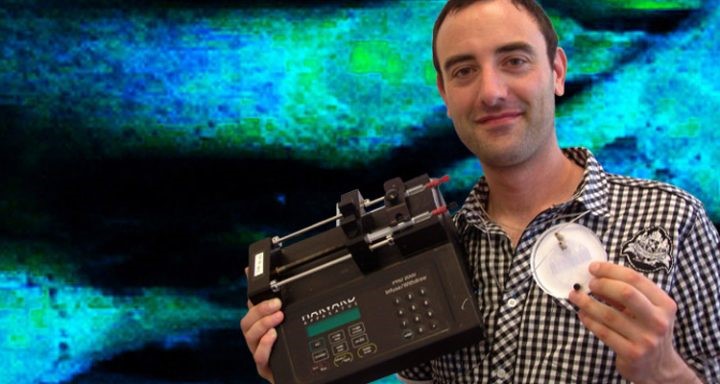
Jesse Greener has been a full professor of chemistry at Université Laval since 2012 where his research area focuses on the combination of microfluidics/microfabrication, electrochemistry and analytical chemistry at the microscopic scale. Jesse is also the founder of Canada’s most established microfluidics company, FlowJEM Polymer Microfluidics, which operates in Toronto. Jesse’s team operates a well-funded research laboratory to develop and commercialize microfluidic analysis tools for spectroscopy and electrochemistry and use them for studies on the recovery of values from waste streams (waste to wealth). A major research theme of his group concerns bioelectrochemical systems (BES), which exploit electroactive bacteria to break down organic molecules in domestic and industrial wastewater. His group has demonstrated the world’s most efficient microfluidic microbial fuel cell, as well as new specialized methods for their study, including computational simulations of fluid dynamics. Other areas of interest include waste heat recovery, various sensors, electrochemical CO2 reduction, and bioinformatics.
Jesse Greener is a full professor in Chemistry at Université Laval since 2012 where his research area focuses on combining microfluidics/microfabrication, electrochemistry and microscale analytical chemistry. Jesse is also the founder of Canada’s most established microfluidic company, FlowJEM Polymer Microfluidics, which opperates out of Toronto. Jesse’s team exploits a well-funded research laborator to design and commerciallized microfluidic analytical tools, for spectroscopy and electrochemistry and use them for studies into recovery of valubles from wastestreams (waste-to-wealth). A major research theme in his group is bioelectrochemical systems (BES), which exploits electroactive bacteria to breakdown organic molecules in domestic and industrial wastewaters. His group has demonstrated the highest performing microfluidc microbial fuel cell in the world, along with new specialized methods for their study, including computational fluid dynamics simulations. Other areas of interest include waste heat recovery, various sensors, and electrochemical CO2 reduction, and biocomputing.
Jesse Greener
Jesse Greener has been a full professor of chemistry at Université Laval since 2012 where...
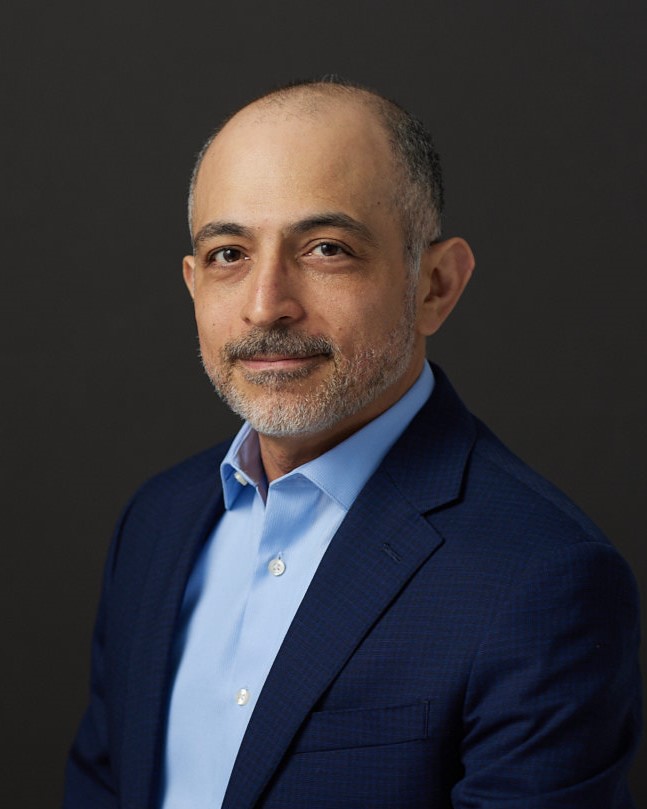
José Candanedo
José A. Candanedo is an Associate Professor in the Department of Civil and Building Engineering at the Université de Sherbrooke. His research interests include model-based predictive control for buildings, development of optimal energy control and power demand management strategies, control-oriented modeling of thermal dynamics of buildings and HVAC systems, data analysis in buildings, modeling of thermal energy storage devices, energy flexibility and building-grid interaction. José is part of the Canadian delegation participating in the IEA EBC Annex 81 “Data-Driven Smart Buildings” (2019-2023), where he co-leads Subtask B (Model-Based Predictive Control).
José Candanedo
José A. Candanedo is an Associate Professor in the Department of Civil and Building Engineering...
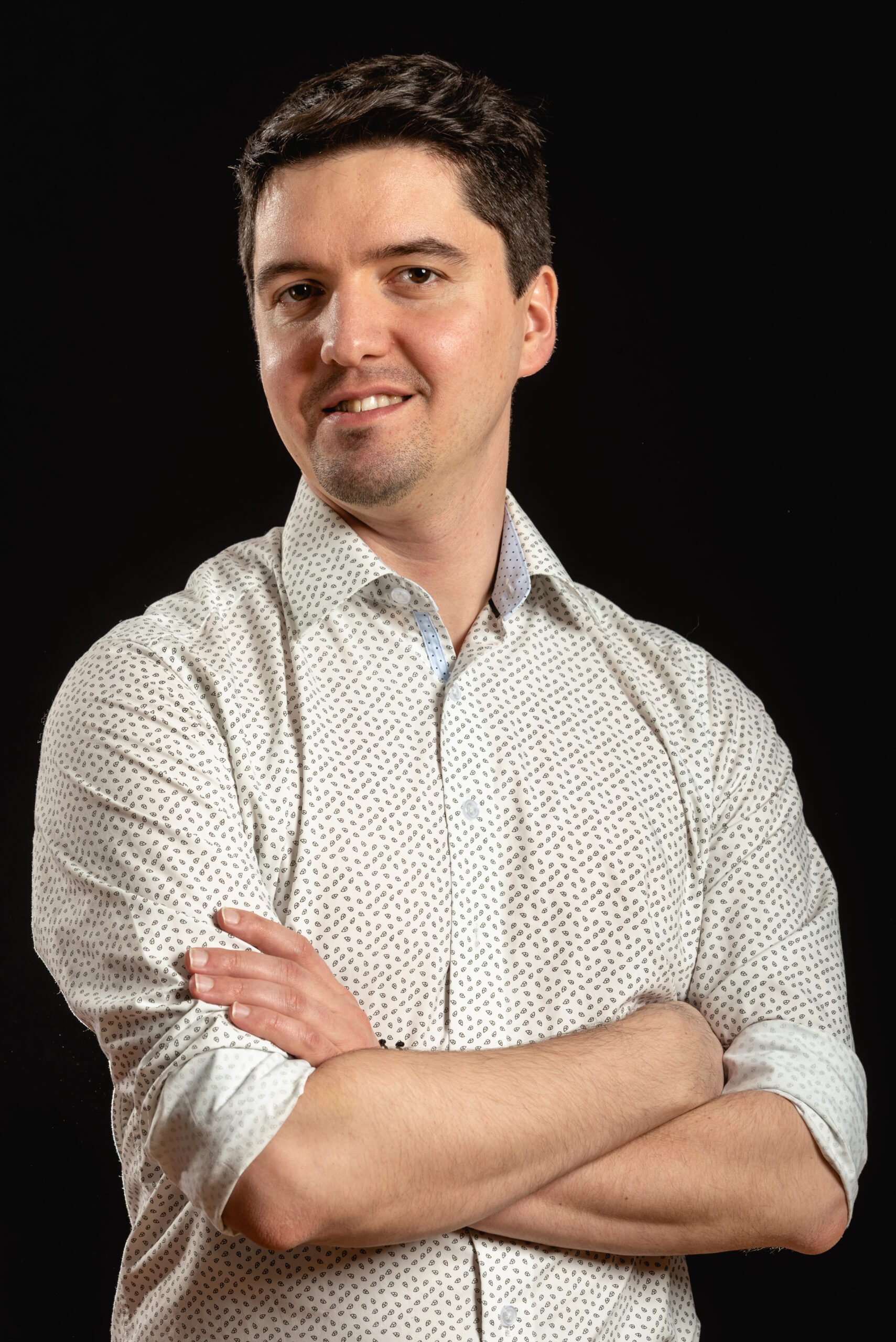
Jacopo Profili
Professor Jacopo Profili is a specialist in innovative materials. Holder of a double PhD in plasma physics and engineering from the Université de Montréal and the Université Toulouse III, he has developed an expertise in the physics and chemistry of plasma systems at atmospheric pressure focusing on the study of interactions with complex multiphase media (solids, liquids, gases and suspensions). Focusing on the synthesis of advanced nanomaterials and the creation of new atmospheric pressure plasma systems, his research aims to develop new advanced processes and materials for energy and environmental technologies. Professor Profili is also co-founder of KALEGO Solutions, a company that specializes in the creation of highly innovative surfaces.
Jacopo Profili
Professor Jacopo Profili is a specialist in innovative materials. Holder of a double PhD in...